Understanding Refrigerant Subcooling

4 October 2018

Share this article

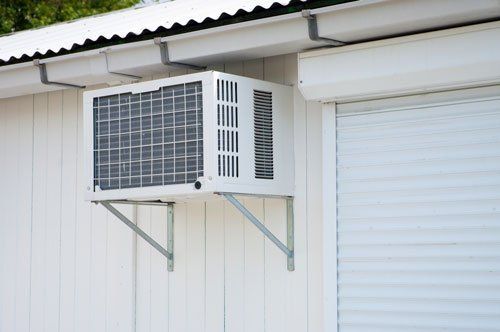
Window air conditioner mounted on an exterior wall under a corrugated roof overhang.

An air conditioning system utilizes refrigerant in order to accomplish its cooling. The cooling process takes place inside of the system's evaporator coil. As high-pressure liquid refrigerant flows into the evaporator coil, it experiences a sudden pressure drop. This causes the refrigerant's temperature to drop.

The blower system then circulates the warm, interior air around the evaporator coil. The chilled refrigerant absorbs heat through the walls of the evaporator coil. Once the coil has absorbed as much heat as possible, the cycle can repeat. To a large degree, the efficiency of an air conditioner has a lot to do with the thermal capacity of the refrigerant inside the evaporator coil.

One of the factors that determines how much heat the refrigerant can absorb is subcooling. Subcooling is a process that takes place inside of your condenser coil shortly before the refrigerant moves on to the evaporator coil.

This article takes a closer look at the important role that subcooling plays in overall air conditioning efficiency.

Before getting to the specifics of subcooling, you should know what happens to the refrigerant once it exits your evaporator coil. At that point, the refrigerant has absorbed enough heat to change the liquid to a gas. This low-pressure gas then flows back to the condensing unit and enters the compressor.

The compressor increases the pressure of the refrigerant, giving it the speed necessary to continue traveling through the system. Next, the refrigerant flows into the condenser. The condenser lowers the refrigerant's temperature in order to convert it back to its liquid form. This conversion happens at the socalled saturation temperature.

Once the refrigerant has cooled down to the saturation temperature, it begins changing to a liquid. However, the cooling process doesn't stop there. Before leaving the condenser to return to the evaporator coil, the refrigerant's temperature drops below the saturation temperature into the realm of subcooling.

The most basic meaning of subcooling is any temperatures below the saturation temperature. Generally, the lowest temperature a condenser can achieve, the better. In other words, the colder the refrigerant is as it flows into the evaporator coil, the more heat it will be able to absorb.

In this regard, subcooling acts as a useful predictor of overall efficiency. Of course, in order to provide useful information, subcooling must be precisely quantified. Contractors quantify it by using special digital thermometers to measure the temperature of the refrigerant as it exits the condenser.

The difference between this temperature and the saturation temperature tells you the exact amount of subcooling. For a well-working system, subcooling usually falls into a range of 6 and 10 degrees Fahrenheit.

One of the most common sources of air conditioner inefficiency involves insufficient subcooling. This limits the amount of heat the refrigerant can absorb. In extreme cases, insufficient subcooling may even lead to the refrigerant converting back to its gaseous form before it ever reaches the evaporator coil.

Perhaps the most common cause of insufficient subcooling is an abnormally low refrigerant charge. Lack of refrigerant usually means that your system suffers from one or more leaks. Attending to the leaks and then increasing the system's refrigerant charge should restore proper subcooling.

Be aware, however, that subcooling can work against your system if it increases too far. An excessive amount of refrigerant will boost subcooling to a problematic level.

At this level, the refrigerant will become so cold that it does not all turn to a gas inside of the evaporator coil. As this liquid refrigerant flows into the compressor, it leads to dangerously high pressure levels. Liquids, unlike gases, cannot be compressed. For this reason, no liquid refrigerant should ever enter your compressor.

For more information about how subcooling works and why it's important to have monitored, contact the home HVAC pros at Haskins Heating & Cooling.

Recent Posts

Hand pressing a white thermostat control panel showing a digital temperature display
26 April 2023
Unfortunately, thermostats can begin to malfunction over time. Learn the four signs that you should take action to help you maintain your thermostat.
Row of outdoor HVAC units beside a white brick building with neatly trimmed shrubs and gravel landscaping
24 March 2023
Most home appliances produce various types of noises throughout the day. Learn about the good and bad sounds that can emanate from your unit.
White room with a wall-mounted air conditioner blowing cool air near a window.
8 March 2023
Ductless air conditioners may be the best way to cool down your house. Read our blog to discover seven advantages of ductless air conditioners.
Woman pinching her nose, looking to the side, against a dark background
2 February 2023
A smelly furnace is a good sign of a problem with your heating system. Read this blog to learn what causes various odors in furnaces and heating systems.
Man in red jacket pressing buttons on a wall-mounted thermostat control panel
8 December 2022
6 Top Heating Problems In Winter Heating experts are busiest in winter because many heating systems break down or need servicing to withstand the cold weather. You must be vigilant during this time as
Hand holding a white filter panel beside a large black appliance on a concrete floor
7 December 2022
When you shop for a furnace, you may need clarification on the right type for your home. Learn about two types of furnaces you might choose.
Large industrial cooling fans on a building exterior with bright sunlight streaming in from the right
12 September 2022
Does your HVAC need a professional replacement? If you are unsure, read this blog to learn about telltale signs that a replacement may be necessary.

Buffet counter with trays of carrots, diced squash, broccoli, and corn in a kitchen
3 August 2018
Working in a restaurant kitchen doesn't have to be unbearably hot this summer. Follow the tips on this blog to keep your kitchen cool.

Family relaxing on a living room couch while two children crawl on the floor toward a toy car.
12 June 2018
Kids get into everything, don't they? Follow these tips to protect your HVAC system from playful, and sometimes destructive, child behaviors.
Close-up of a dusty HVAC filter or air vent with black frame and metal grille.
5 June 2018
Your home's central air conditioning system is made up of thousands of components. Contact an HVAC service today to learn more about maintenance.

Show More